Book One
The Cost of Staying the Same
A personal account of bargaining, drift, consequences, honesty, and the shift from managing symptoms to taking ownership. Alcohol is part of the story; recognizing patterns is the larger point.
View on Amazon ↗Tactical Ownership is the discipline of seeing what is actually happening, understanding what matters, and taking responsibility for how you respond. It does not promise control over the world around you. It builds a clearer way to move through it.
You do not need to read a manifesto before Tactical Ownership can be useful. Start with the part that matches what you are trying to understand.
What Tactical Ownership means, what it does not mean, and why ownership is different from blame or control.
Read the philosophy →02Five simple questions that organize information when pressure, emotion, uncertainty, or overload make clear thinking harder.
Use the 5W →03See what happens when the same thinking is applied to software, tools, prototypes, and ordinary problems that deserve a better answer.
Explore projects →Reaction is automatic. Response requires awareness, discipline, and enough of a pause to gather information before emotion makes the decision for you.
The framework grew from firsthand experience: first recognizing destructive patterns, then learning to stop negotiating with reality, and finally building a repeatable way to create clarity when life felt loud. The origin is personal. The application is much broader.
Go deeper →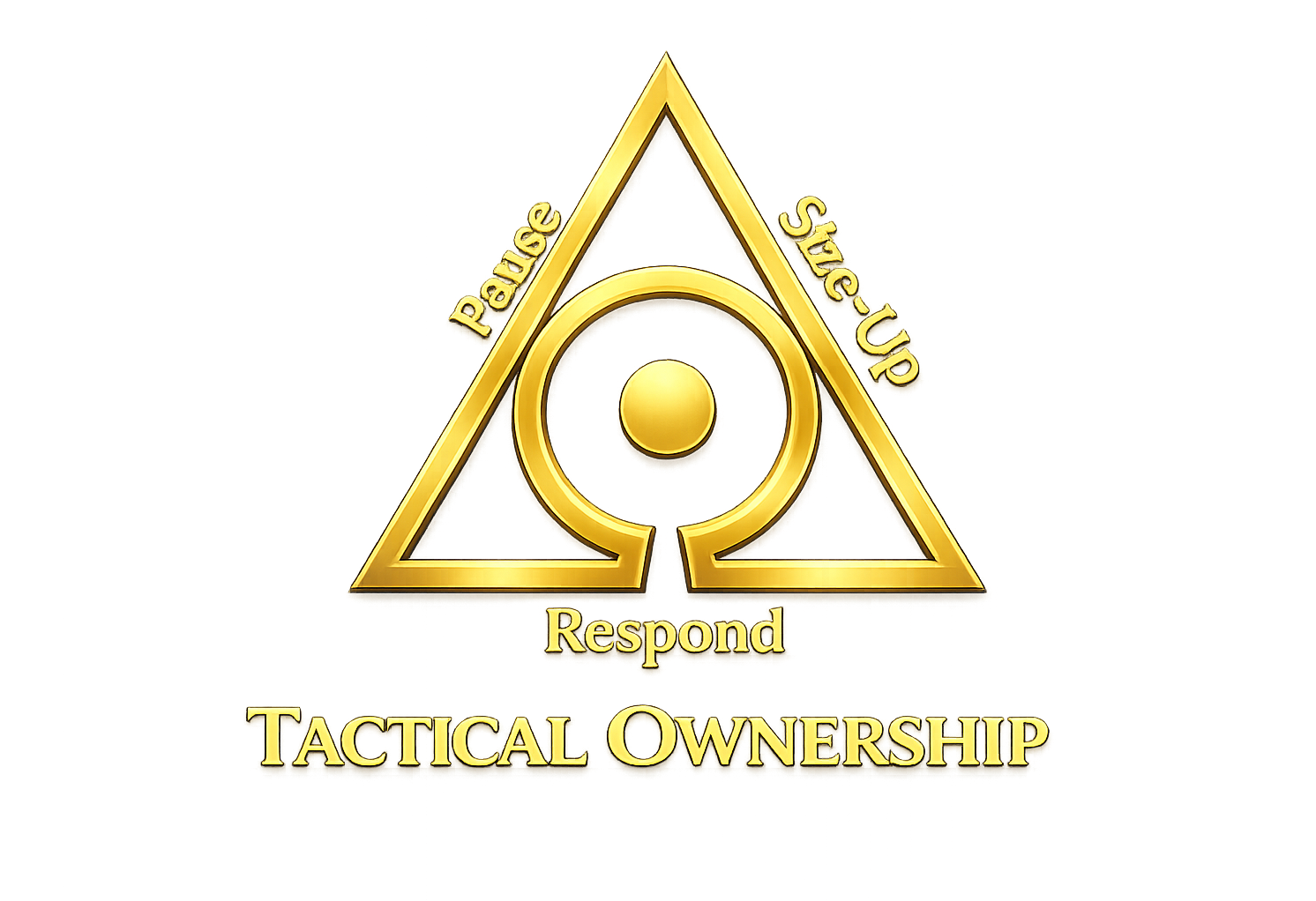
The 5W is not a test and it is not a script. It is a mental size-up: a way to organize information, identify risk, see options, widen awareness, and recognize what is already stable.
Start with facts. What actually occurred—not what you assume, fear, or wish occurred?
Identify the meaningful risk: physical, legal, professional, emotional, financial, relational, or something else.
What options create space, change position, slow escalation, or let you disengage if that becomes the disciplined move?
Who is involved, who can influence the outcome, who can help, and who changes the environment simply by being present?
What is stable, useful, available, or already in your favor that pressure may be causing you to overlook?
Clarity is not a single moment. It is an ongoing process.Continuous size-up
The first time you use the framework, it may feel deliberate. That is fine. Firefighters do not wait for emergencies to learn how to notice exits, hazards, conditions, and resources. They practice until observation becomes habit.
Tactical Ownership applies the same idea to everyday life: notice more, assume less, reassess when information changes, and be willing to change direction without treating adjustment as failure.
See how the size-up works →The first book tells the truth about the patterns that forced change. The second explains the practical system that grew from that experience.
A personal account of bargaining, drift, consequences, honesty, and the shift from managing symptoms to taking ownership. Alcohol is part of the story; recognizing patterns is the larger point.
View on Amazon ↗
The practical side of Tactical Ownership: scene size-up, information overload, mental files, continuous reassessment, debriefing, practice, and the discipline to respond before reacting.
View on Amazon ↗Tactical Ownership is not meant to stay in a book. The projects are different expressions of the same habit: size up the actual problem before accepting the obvious answer.
A decision-support application built to help people organize difficult situations, understand options, and leave with greater clarity and a realistic next step.
See Run Clear →Future projectAn idea focused on honest self-observation and seeing patterns clearly enough to make choices that fit who you are becoming.
See the project space →WorkshopSpinners, holders, prototypes, and practical tools. Sometimes the Tactical Ownership answer is not software. Sometimes it is simply a better object.
See what is being built →A curated directory of outside organizations and practical support for situations where information alone is not enough.